Get in touch
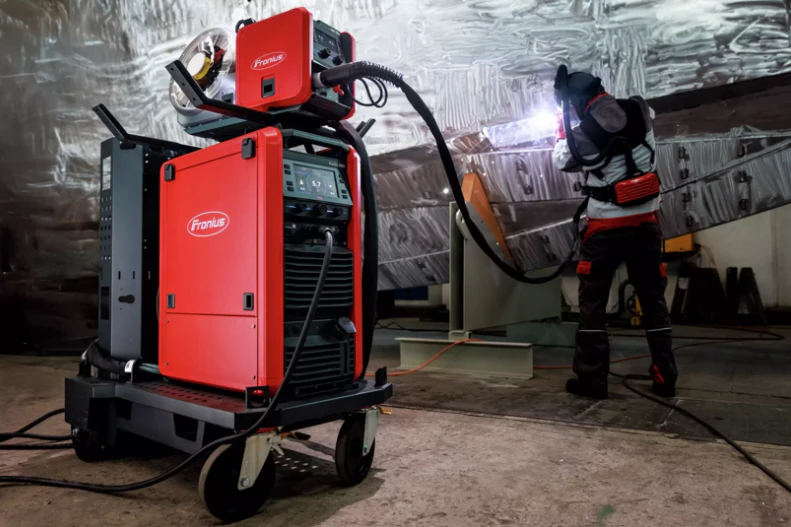
Choosing a MIG welder
MIG welders offer a quick solution to joining metals. With material type & thickness, input voltage & a host of other factors influencing your choice of MIG welder, we help you build a specification for the machine you need. We discuss synergic, pulse, push pull & water cooling along with user interfaces and key considerations such as duty cycle, drive blocks & burn back.
Key considerations
- What amperage machine is required to to do the job? Presume 35 to 40 amps per millimetre to be welded.
- What material will be welded? mild steel, stainless, aluminium & any others?
- Synergic or synergic pulse ? Most machines are now synergic & have pre-programmed settings according to type of material & diameter. Having a pulse facility is a significant benefit, when welding stainless & aluminium.
- How easy is the interface on the machine to operate? A simple set up & the ability to store frequent tasks to memory is essential.
- What is the duty cycle of the machine? Check the duty cycle isn't too low (We explain more in our article below). Water cooling maybe needed for heavy duty, time on applications.
- What is the wire drive system specification? 2 or 4 roll? The rollers are typically V grooved, but should be switched to U groove for aluminium. Make sure the drive block & rollers are durable.
- What is the MIG torch specification & length? Check the torch amperage is sufficient for the job. Liners & contact tips will need changing if you are welding stainless or aluminium.
- What input power do you have available? You will be limited on output if you have a 240 volt supply. Maximum amperage output on 240 volt is typically 200 amps, allowing you to weld up to 6mm.
- How good will the after sales service be ? Is there a local distributor with engineers who can site visit?
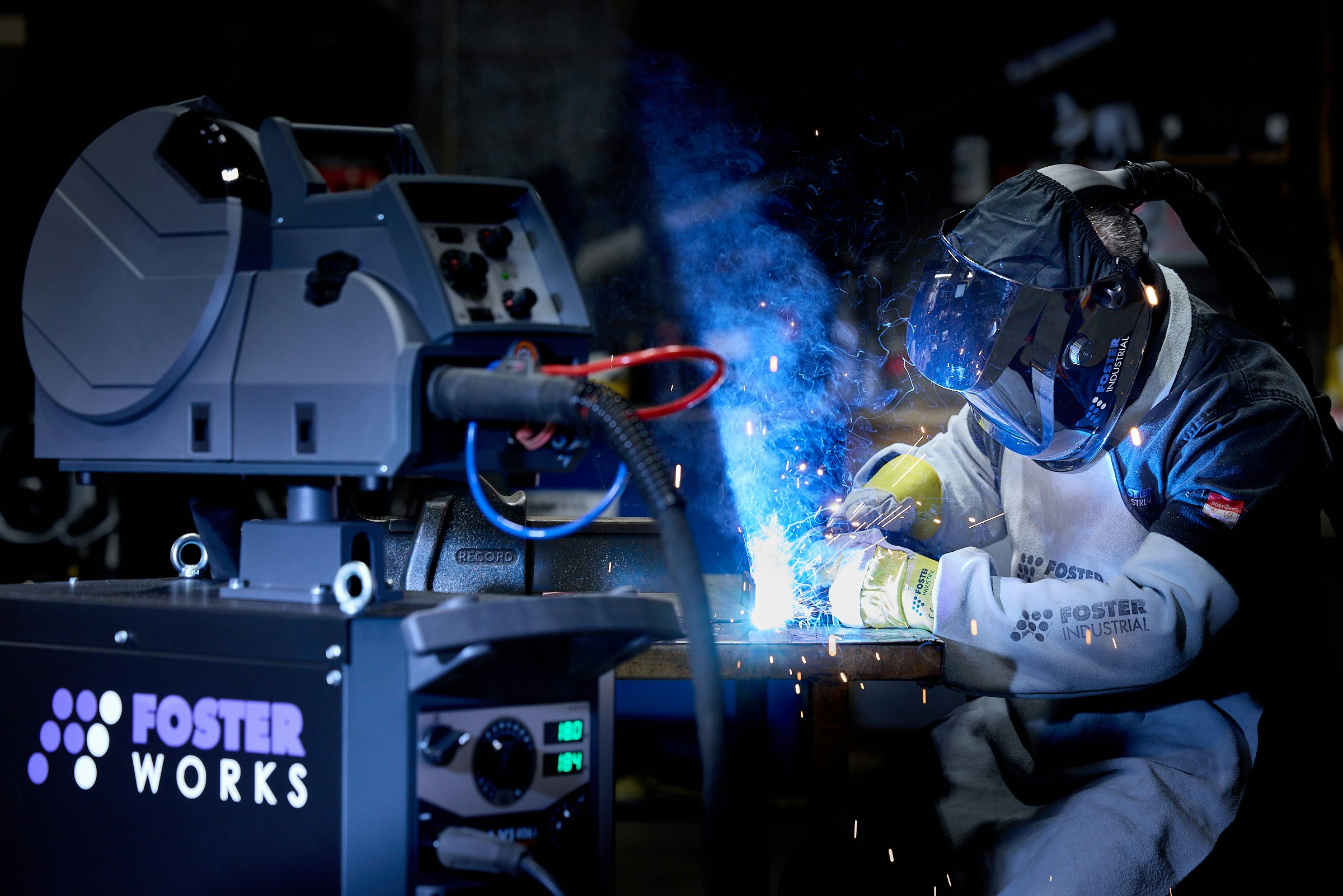
Fan on demand, PCB's, burn back, gas purge & wire inch
- Fan on Demand : This feature lowers running costs and reduces contamination to internal components. The fan kicks in when its needed, rather than running all day.
- Printed Circuit Board Protection; If the Machines PCB's are protected from dust & kept away from the fan, reliability will increase. Some manufacturers have the parts that need cooling in a duct type housing & the PCB isolated separately.
- MIG wire inch button; Saves wasting your shielding gas when feeding wire through at the start of a new reel.
- Gas Purge button; Another nice option. Save yourself some MIG wire, when you're setting your gas flow.
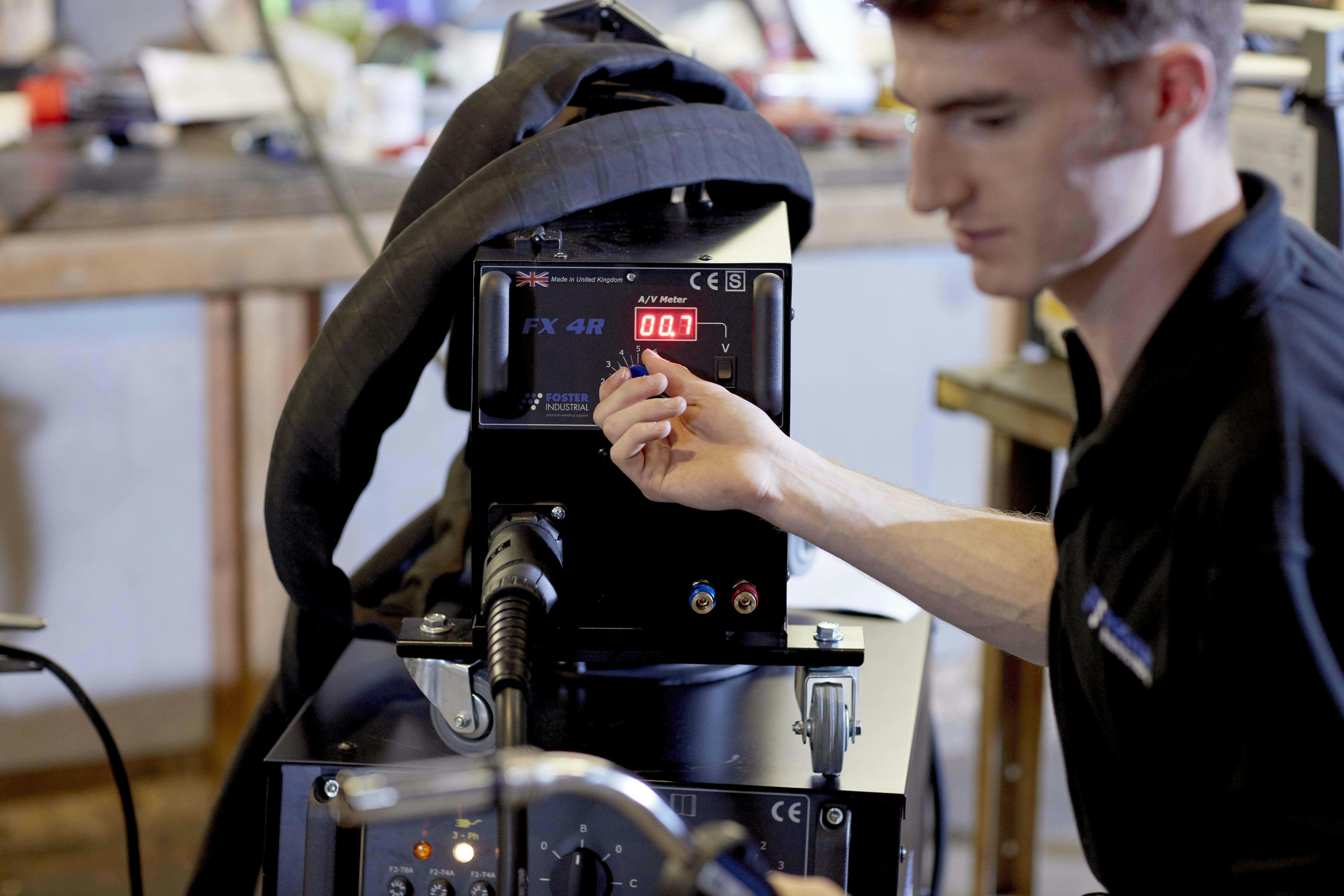
- Burn Back; Not all machines have this externally, but it is good to be able to trim the burn back to the wire according to the application & operator.
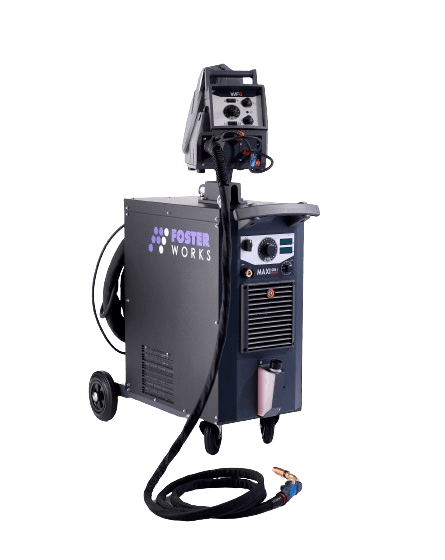
Drive blocks, Budget, polarity & Duty Cycle
- Drive Block Systems; Four roll would always be first choice, but some of the lower amperage machines won't have them, meaning two roll would be more acceptable.
- Budget; How much welding are you going to undertake? Gear your purchasing decision around jobs you'll do most.
- Polarity Changeover; A lot of welders at the light industrial end will be able to weld with gasless flux cored MIG wire. Is the switch over easy on the machine you're considering?
- Duty Cycle Testing; MIG welders tested at 20 degrees & 40 degrees we consider good. Beware any manufacturer who doesn't quote an ambient temperature for testing duty cycles. Light industrial machine duty cycles can be as low as 20% but heavier ones should range between 40-60%. However a 300amp MIG with a 30% duty cycle is acceptable.
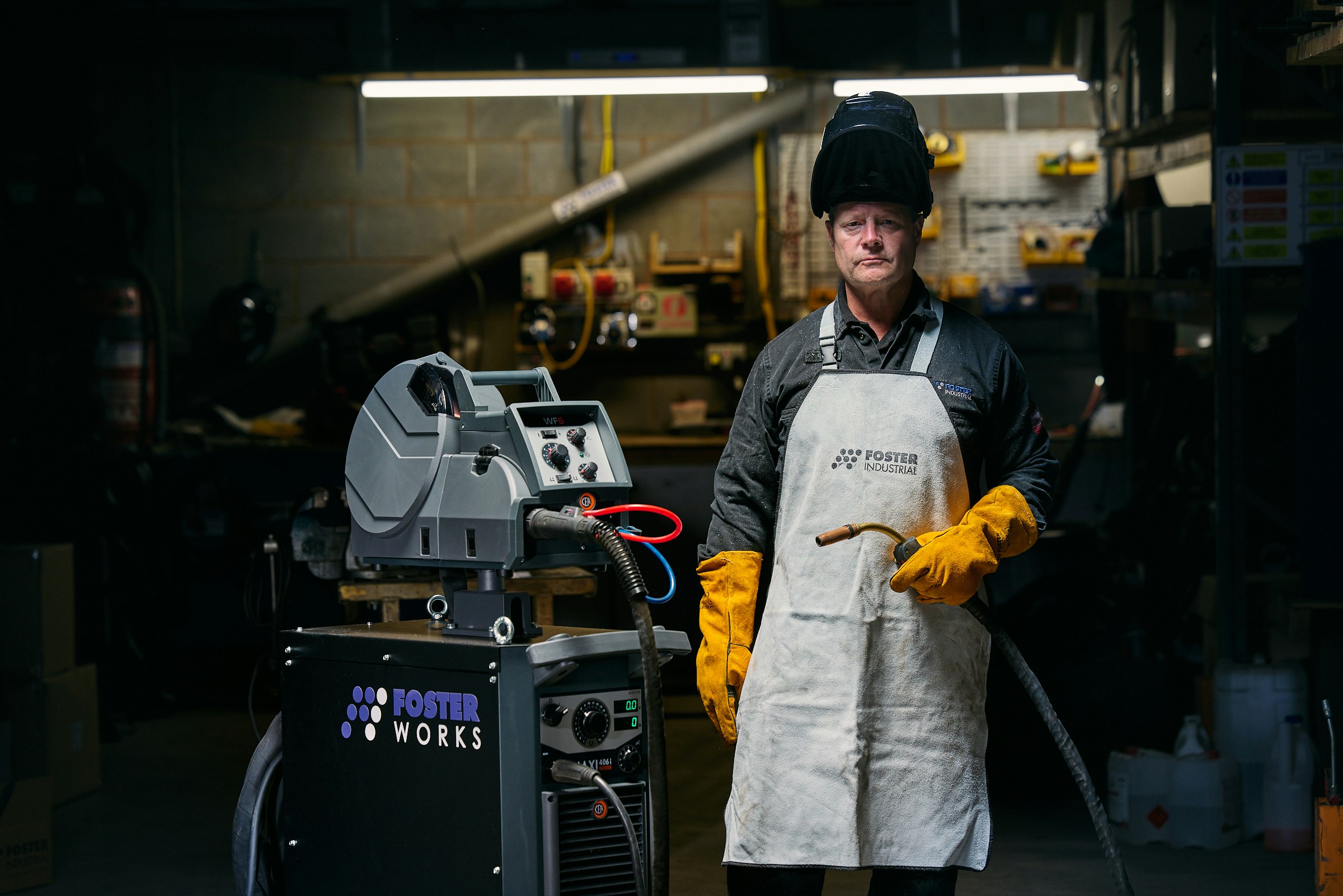
Meters, amperage, warranty & weld condition.
- Digital Meters Factory Fitting; Great to have when you purchase and may be required for calibration requirements. To fit them retrospectively could be costly.
- Availability of spares/after sales service ; Ask where the machine is manufactured. Even recognized brands outsource their production, which can lead to quality and after sales issues with a lack of continuity around supply for spares.
- Selecting the correct amperage machine; Generally, you should work on 35-40 amps per 1.0 mm diameter of material to be welded.
- Manufacturers Warranty; This is a great guide to quality. A three year warranty is good cover, five years exceptional. Be sure to return your registration.
- Weld Characteristics; Make sure the arc is smooth and that it is suitable to your choice of application.
Synergic MIG benefits
The synergic MIG welder is prevalent in inverter based MIG sets and offers a number of benefits to the operator, consistent with manufacturer pre-programming & synergic lines. Synergic MIG isn't to be confused with Pulse MIG, which is typically a feature added to a synergic inverter.
- Easy Set up: The operator dials in the base material, thickness, wire diameter & shielding gas and the MIG welder will calculate the arc characteristics required
- Memory settings; Programs can be stored for future repeatability & quick start up
- Easy to use interface; Skill levels can be reduced with easy to use one knob control panels & intuitive LED panels
Pulse MIG technology explained
The Pulse MIG process works by switching electronically between a high peak & low background current to reduce heat input. The advantages to the operator as a follows.
- Low to zero weld spatter: The pulse process offers spatter free welds, which reduces post weld dressing & clean up
- Low heat input: With the weld pool being cooler, thinner materials can be welded without distortion. With burn through being particularly prevalent in stainless & aluminium MIG welding, this is a significant advantage.
- Reduced weld fume: Welding fumes are significantly reduced, lower the exposure level for operators.
- All positional welding; As the weld pool is cooler, MIG welding in the vertically up & overhead positions is made easier.
- Gap bridging; With precise arc control, uneven joints on poor fit up can be resolved.
Bottle Trolleys & Drive Rollers
Drive rollers: The choice of drive rollers relates to the wire being fed. Solid Mild steel & stainless steel require 'V' grooved rollers, which provide grip.
With aluminium being softer & feeding more difficult as a result, 'U' shaped rollers help prevent nesting by offering support.
For flux cored wires,' V knurled' rollers are needed to grip the wire, the serrated teeth assisting with forcing the wire to the MIG torch tip.
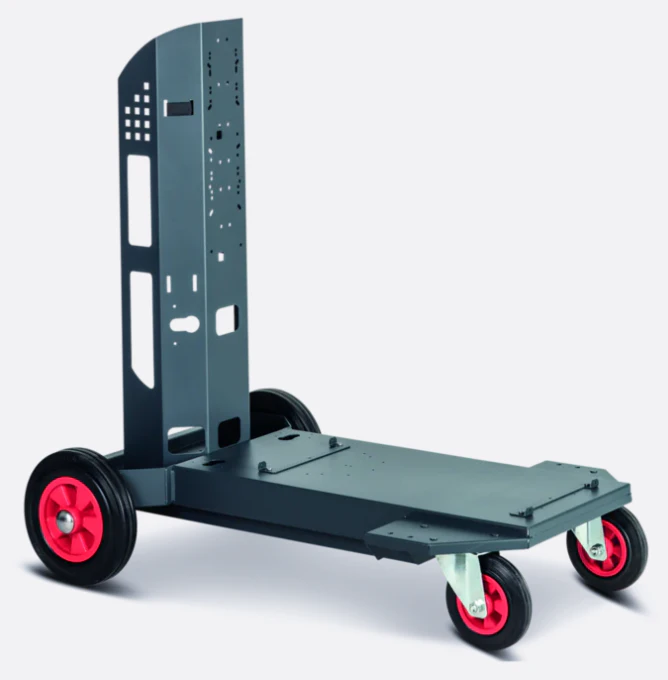
Bottle trolleys: If you plan on making your MIG welder portable make sure you have you have a robust bottle rack & running gear as part of your MIG package. The gas cylinder needs to be vertically supported by a structure & retained with a chain, whilst the machine running needs two sturdy castors at the rear & adjustable ones at the front.
Push-pull MIG Welding for Aluminium
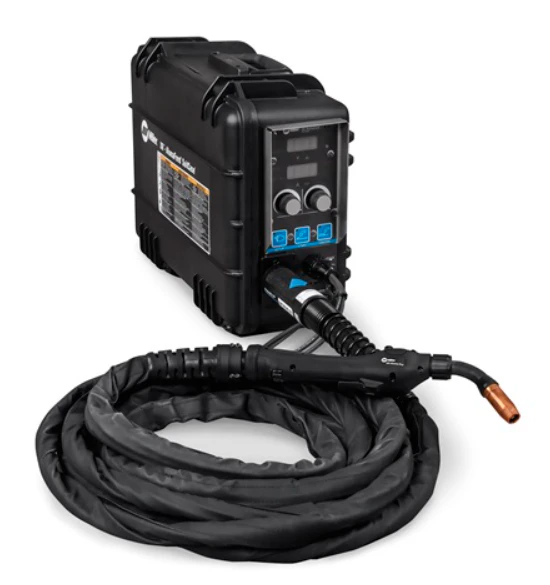
- Synchronized motors: The softness of aluminium MIG wire creates feeding issues such as bird nesting in the MIG torch, this is overcome in push-pull by synchronizing two motors in the feeding system. The wire feed unit pushes the wire & the gun itself pulls the wire through to the tip.
Extended reach: Traditional MIG torches have a maximum length of 5 metres, with push-pull technology the torch can be up to 15 metres long. This allows the operator to weld inside large structures without moving the feed unit to the job.
Water Cooling
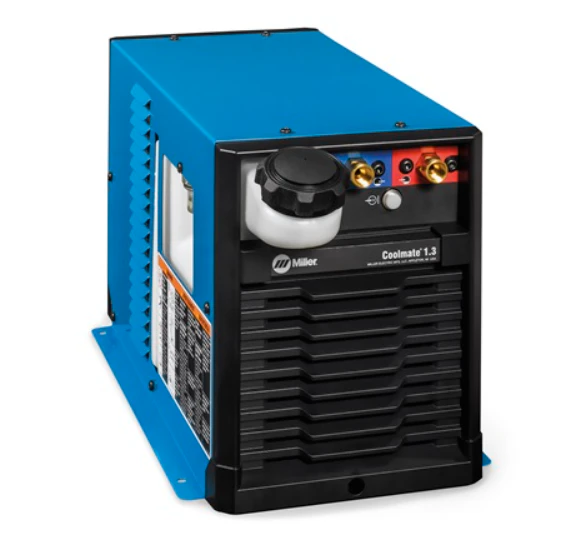
- High amperage: With high amperage, high duty cycle MIG applications, the torch becomes extremely hot affecting arc stability & performance. Water cooled MIG torch front end consumables & the torch neck are kept cool by re-circulating water coming from a chiller unit. Strain & heat degradation is also reduced in the torch power cable, reducing maintenance costs.
- Consumable life; Hot end MIG torch consumables such as contact tips & nozzles have extended life & this prevents downtime & cost.
- Layout Investment: By choosing water cooling you are making a significant investment in a cooler unit & water cooled torch.
- Maintenance costs: Regular servicing with annual cooler flushes & coolant replenishment is essential to keeping everything pumping. If your cooler fails, the MIG torch will burn out and require repair or replacement.
Our product picks compared

synergic pulse for up to 5mm
Welding current; 5 to 200 amps (MIG/TIG/MMA)
Pulse functionality: Great for MIG welding mild steel, stainless & aluminium
Single knob Synergic welding mode & interface
Built in burn back MIG facility
Heavy duty aluminium MIG wire feed block
Weight; 16 kilos
240 volts

Great for stainless & aluminium
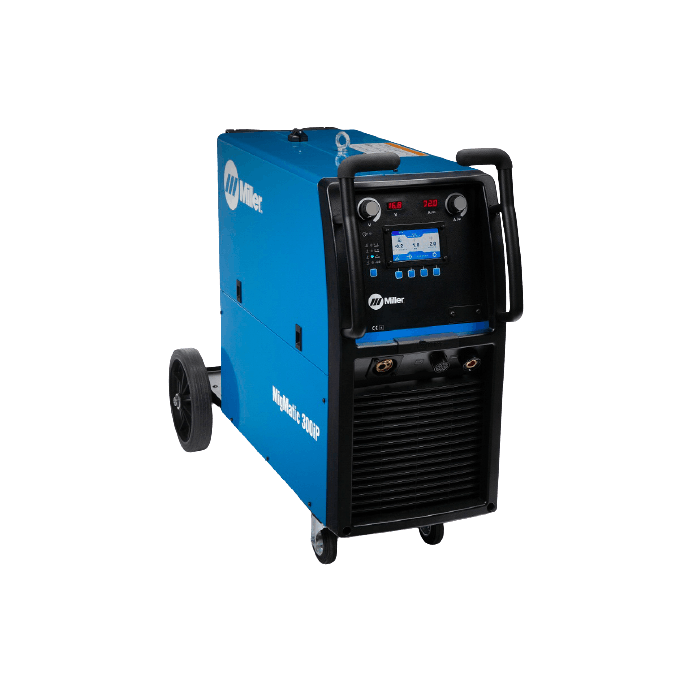
Welding Current: 15-330 amps, 300 amps @40% duty cycle
Synergic pulse MIG with pre-sets for optimal weld performance
Heavy duty 4 roll wire drive block
Easy to use control interface; Large LCD control panel
Accessing of four pre-sets for torch trigger
Weight; 57 kilos
415 volts

Robust high amp inverter MIG
Current range; 20 to 400 amps, 400 amps @ 35% duty cycle
Robust easy to use inverter MIG within infinite current adjustment
Great arc characteristics, optimised for most materials
Digital ammeter/voltmeter with hold function of the last parameters.
Heavy duty four roll double grooved wire feed unit
Burn back & motor ramp adjustment for precise striking.
415 volts
Shop MIG Welding


Shop Fronius MIG Equipment


