Get in touch
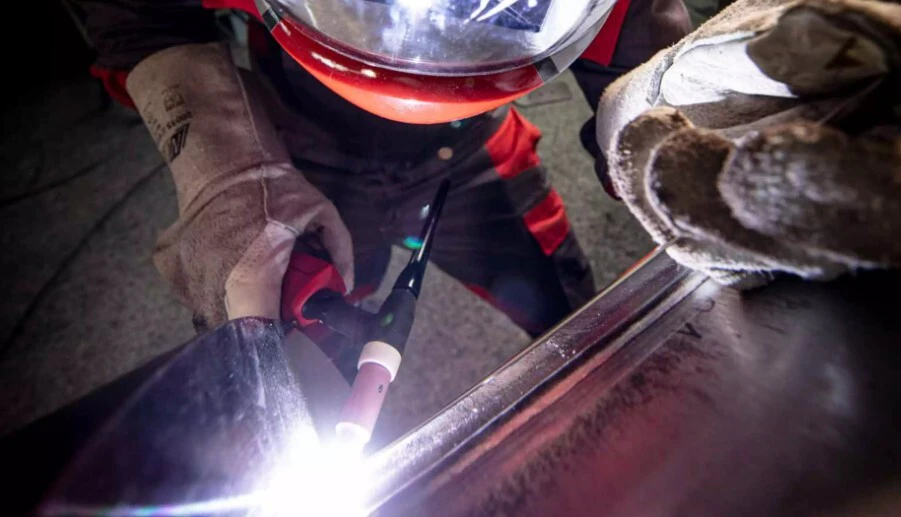
Choosing a TIG welder
DC & AC/DC TIG welding inverters offer clean aesthetically pleasing welds with integrity. With material type & thickness, input voltage & a host of other factors influencing your choice of TIG welder, we help you build a specification for the machine you need. We discuss high frequency, scratch start & lift arc starting along with user interfaces and key features such as pulse TIG.
Key considerations when choosing a TIG welder
- What are your budget constraints? Look at the regularity of use against brand reliability & warranty.
- Do you require portability? TIG welders are inverter based & generally portable in 110/240 volt models. 415 volt high amp units typically have water cooling & bottle carrying, meaning running gear is required.
- What is the thickness of the material you are welding? Beyond welding 5mm diameter thickness, you will need a 415 volt model.
- What type of material are you welding? This will affect the welding current required. You need DC current for mild steel & stainless and AC current for aluminium.
- What input power do you have available? 110, 240 or 415 volts? If 110 or 240 volts check whether it is 16 or 32 amp rated, as it will effect output.
- Does the machine have a Pulse facility? Reduces heat input & distortion.
- Has the welder got an easy to use control panel? Setting up for different materials & processes made easy.
- Does the machine have scratch start, lift arc or HF starting? We discuss this subject in more detail in this article.
- Do you need a foot switch? Allows for instant & complete control over the welding arc.
- Do you need water cooling? Typically Aluminium welding requires water cooling, due to the TIG torch overheating.
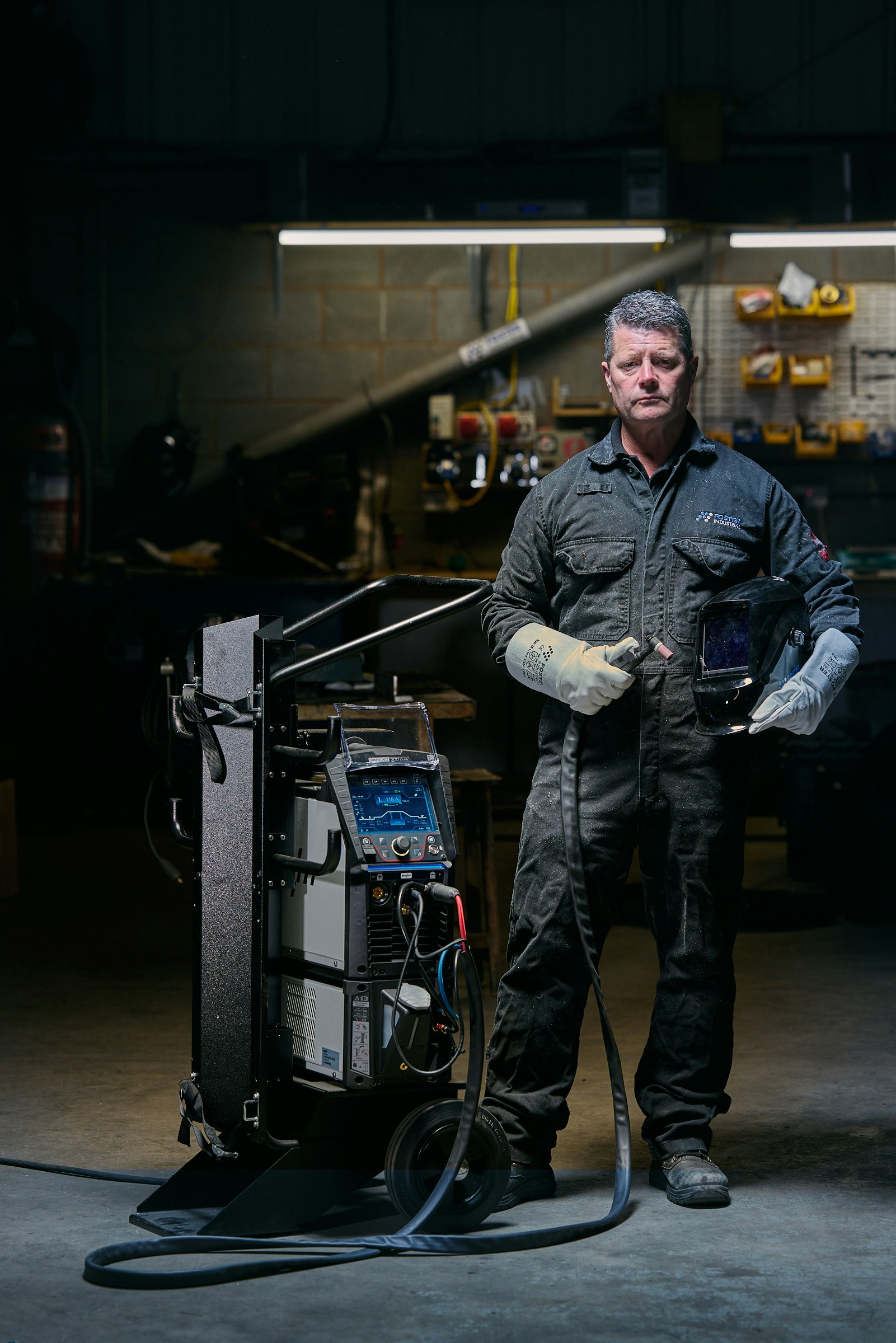
Material Choice & diameter
- The material that you are welding will play a factor in the choice of TIG welders available.
- If you are welding aluminium you would need to purchase an AC/DC TIG machine, as DC only TIG welders will not weld aluminium. AC/DC options, are slightly higher end on the pricing spectrum.
- You don’t want to rule out the choice to weld more materials, so purchasing a machine that can weld more materials may be a wise option.
- You need to consider the amperage you require from a machine, if you are welding thicker materials, you’ll obviously need a higher amperage machine.
- Work on 35 amps per mm to be welded & remember to consider the duty cycle of the machine, according to the amount of work you’re performing.
- Aluminium welding generates more heat & at high amperage, will definitely require water cooling.
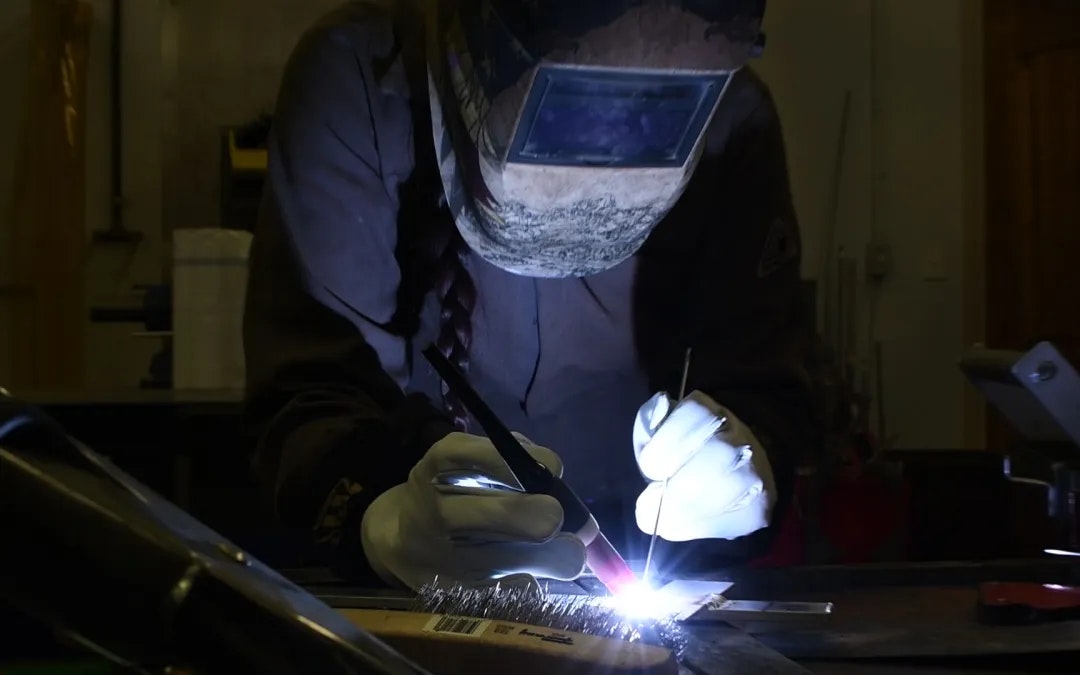
Pulse TIG welding
- Pulse TIG offers better a weld as reduced heat input and control over the weld puddle, offers reduced spatter and penetration.
- Can increase travel speeds by up 45 %, when operating high speed pulsing.
- Allows for better control of the arc puddle when welding vertically up & overhead.
- Helps to focus the arc more on corners, ends & holes.
- Great for thin gauge material.
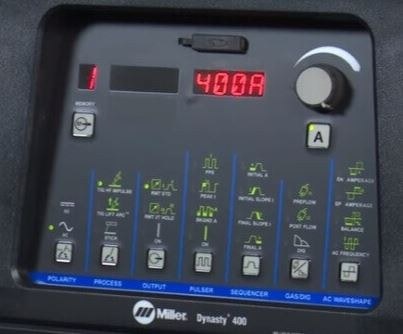
Easy to use control panel, job mode & memory features
- A colour screen & graphical guides for setting your welding parameters is essential. Make sure the interface is easy to use & understand.
- Most TIG sets have heavy duty push button operation buttons with intuitive controls and direct access to all the main functions.
- A memory feature for storing all your favourite tasks should be a standard feature.
- Ideally, you want to be able to dial in the material, material thickness & gas and get started.
- Many manufacturers have processes pre-programmed.
- Does the panel have post flow & down slope?
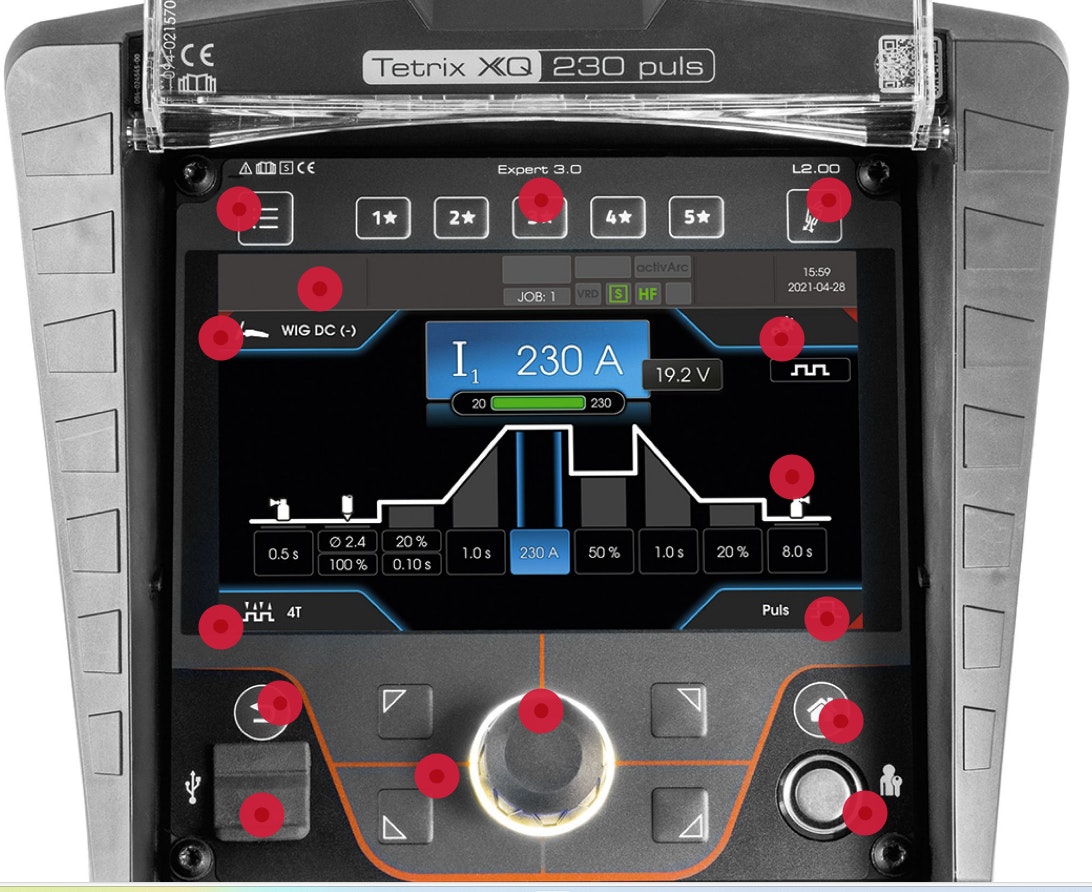
Key TIG control features
- Slope up/down: Raises & reduces welding current, controlling and smoothing arc starts to prevent crater cracking.
- AC balance: Balance control provides adjustable oxide removal essential for creating high quality aluminium welds. Frequency controls the width of the arc cone and can improve directional control of the arc.
- AC frequency: Changes arc focus for wider or tighter weld beads. Frequency controls the width of the arc cone and can improve directional control of the arc.
AC Waveforms:
-Advanced square provides a fast freezing puddle, deep penetration and fast travel speeds.
-Soft square for a soft buttery arc with maximum puddle control and good wetting action.
-Sine for customers that like a traditional arc. Quiet with good wetting.
-Triangular reduces the heat input and is good on thin aluminium. Fast travel speeds.
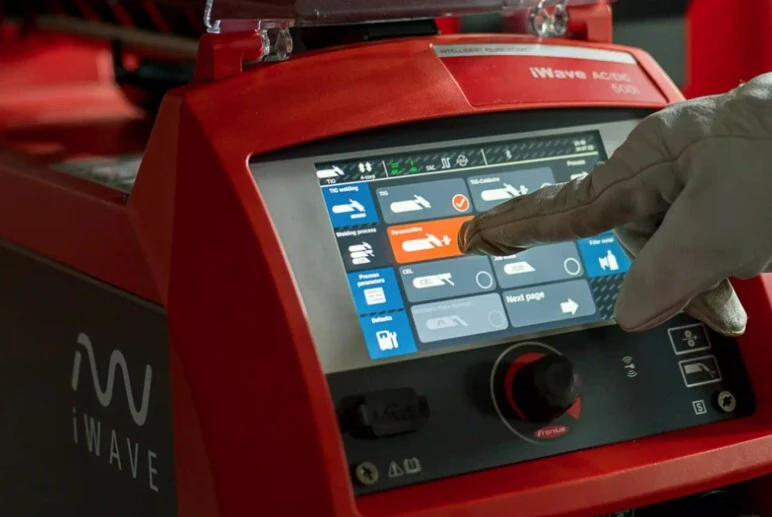
Scratch & Lift Arc start versus high Frequency
- With high frequency the arc ignition starts when the operator touches the tungsten to the work. This method is generally used by professionals and is regarded as the most advanced & costly.
- It requires less skill than Lift Arc, but Lift-Arc is still user friendly and relies on the operator touching the work piece then lifting off to start the arc.
- Scratch start can be tricky to initiate and result in the tungsten getting stuck in the job and is not widely seen on most TIG sets these days.

Input voltage & warranty
- One of the more important aspects to look at is the electrical supply you have available to you; this supply will determine the machine you purchase.
- If you are running 110volts, make sure you have enough power to translate into output. Inverter based three phase TIG machines will need 32 amps, make sure you have it.
- As a standard most welding machines come with a warranty period, some maybe longer than others.
- We would consider a 3-year warranty as a minimum requirement & as an indication of build quality.
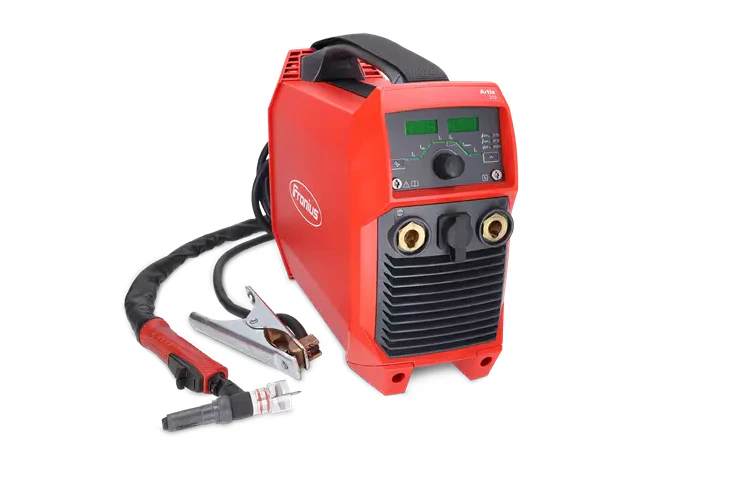
Welding gas
- Unsure on which gas to use for TIG welding? For TIG, only inert gases are allowed, as reactive gases will ruin your work piece. The preferred shielding gases are dependent on the material and intended use.
- Pure Argon is the desirable choice as it can be applied to various material types, it is generally more affordable and helps provide a consistent arc.
- Pure helium, allows TIG welding at higher voltage settings, reducing welding time, but this is generally more expensive. You can have a mix of both shielding gases, producing higher heat inputs, whilst maintaining a consistent arc.
- Hydrogen can also be used, but primarily when TIG welding stainless steel.
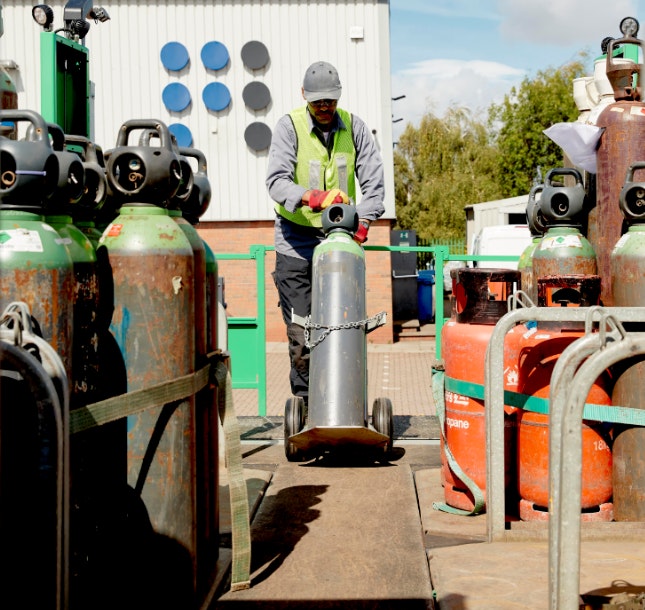
Our best selling TIG welders compared

DC Welding current ; 4 to 160 amps (160 amps @ 20 % duty cycle)
HF & Lift arc starting
Built in pulsing, great for stainless
Features; Upslope/downslope, adjustable pre-flow & postflow
Easy to use interface
Weight; 6 kilos
240 volts

Welding current; 220 amps @40 %
DC TIG & DC Pulse
Comfort 3.0 control panel for simple set up of weld parameters
Lift arc & HF starting
Weight; 10 kilos
110/240 volt input

Welding current; 3 to 230 amp, 230 amps @ 40 % duty cycle
Expert 3.0 panel allows for easy set up & has 5 memory settings
DC TIG, AC/DC TIG & High frequency pulsing
Weight; 19.2 kilos
110/240 volt input

Welding current: 2 to 300 amps, 300 amps @35 % duty cycle
HF & Lift arc starting
3.4 inch LCD easy to use control interface
AC TIG; Balance, frequency & AC wave forms
DC TIG; Pulsing & Pulse waveforms
Weight; 25 kilos
110/240/415 volt input
TIG WELDING SUPPLIES


FEATURED TIG WELDERS
More welding guides


